WORD OF MOUTH: Early Winter

Featured

Novel: The Bandit Queens — Parini Shroff

Non-Fiction: Your Face Belongs To Us: A Secretive Startup’s Quest To End Privacy as We Know It — Kashmir Hill

Psychology: Spite: The Upside of Your Dark Side — Simon McCarthy-Jones

Memoir: Foolish: Tales of Assimilation, Determination, and Humiliation — Sarah Cooper

Memoir: Misfit: Growing Up Awkward in the ’80s — Gary Gulman

Movie: Nyad – Jimmy Chin, Elizabeth Chai Vasarhelyi

Novel: The Thursday Murder Club — Richard Osman

Podcast: What Now? –– Trevor Noah

WORD OF MOUTH: FALL

Featured

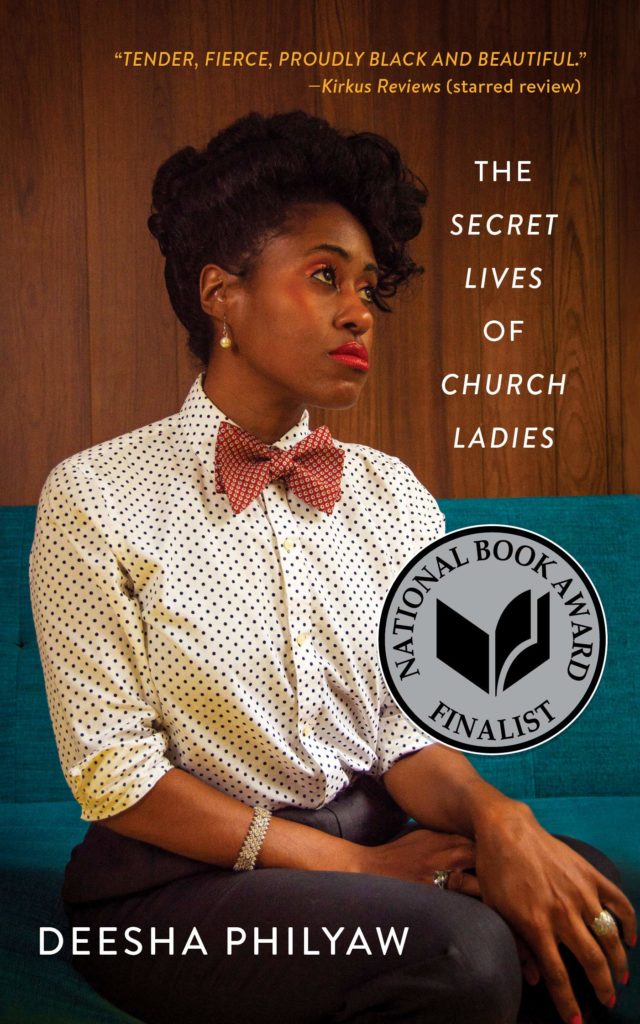
Short Stories: The Secret Lives of Church Ladies — Deesha Philyaw

Novel: How To Love Your Daughter — Hila Blum, translated by Daniella Zamir

Non-Fiction: Kill’em and Leave: Searching for James Brown and the American Soul — James McBride

TV: Never Have I Ever — Lang Fisher, Mindy Kaling

Novel: The Sasquatch Hunter’s Almanac — Sharma Shields

Podcast: How to Think About AI — Freakonomics, Steven Dubner

WORD OF MOUTH: EARLY SUMMER

Featured

Novel: The Liar — Ayelet Gundar-Goshen

Novel: Post-Traumatic — Chantal V. Johnson

Novel: Her — Harriet Lane

Non-fiction: Sorry, Sorry, Sorry: the Case for Good Apologies — Marjorie Ingall, Susan McCarthy

Memoir: The Summer of Fall: Gravity Is a Bitch, but I’m Still Standing — Laura Lippman

Young Adult Novel: Yaqui Delgado Wants to Kick Your Ass — Meg Medina

TV: Abbot Elementary — Quinta Brunson

Movie: You Hurt My Feelings — Nicole Holofcener

Documentary: Three Minutes: a Lengthening — Bianca Stigter, Glenn Kurtz

Word of Mouth: Spring

Featured

Novel: Take What You Need — Idra Novey

Novel: Vera Kelly: Lost and Found — Rosalie Knecht

Novel: The Talented Miss Farwell — Emily Gray Tedrowe

Middle Grade: Cuba in My Pocket — Adrianna Cuevas

Middle Grade, in Spanish: Con Cuba el bolsillo — Adrianna Cuevas, traducción por Alexis Romay

Illumination: Reader, Come Home: The Reading Brain in a Digital World — Maryanne Wolf

Podcast: “The Great Vaccinator” — RadioLab

Movie: The Bad Guys — Pierre Perifel

TV: Not Dead Yet — David Windsor and Casey Johnson

Some thoughts on history:

Featured

Sieve from Coffin House, Newbury Massachusetts. Unknown maker. Image credit: Historic New England.

“Those outside the academy tend to think of history as settled, as a simple recounting of what events happened on what date and who was involved in those incidents. But while history is what happened, it is also, just as important, how we think about what happened and what we unearth and choose to remember about what happened.”

— Nikole Hannah-Jones: The 1619 Project: A New Origin Story

***

“History is not the past. It’s the method we’ve evolved of organizing our ignorance of the past…. It’s the record of what’s left on the record… It’s what’s left in the sieve when the centuries have run through it…. It’s no more the past than a birth certificate is a birth, or a script is a performance, or a map is a journey…. It’s no more than the best we can do. And often, it falls short of that.”

— Hilary Mantel, quoted in On the Media: How Historical Novels Can Help Us Remember

***

“The common denominator of so many of the strange and troubling cultural narratives coming our way is a set of assumptions about who matters, whose story it is, who deserves the pity and the treats and the presumptions of innocence, the kid gloves and the red carpet, and ultimately the kingdom, the power, and the glory. You already know who. It’s white people in general and white men in particular, and especially white Protestant men, some of whom are apparently dismayed to find out that there is going to be, as your mom might have put it, sharing. The history of this country has been written as their story, and the news sometimes still tells it this way—one of the battles of our time is about who the story is about, who matters and who decides.”

— Rebecca Solnit: “Whose Story (and Country) Is This? On the Myth of a ‘Real’ America”

***

“[U]nderstanding history as a form of inquiry—not as something easy or comforting but as something demanding and exhausting—was central to the nation’s founding. This, too, was new. In the West, the oldest stories, the Iliad and the Odyssey, are odes and tales of wars and kings, of men and gods, sung and told. These stories were memorials, and so were the histories of antiquity: they were meant as monuments….

“Only by fits and starts did history become not merely a form of memory but also a form of investigation, to be disputed, like philosophy, its premises questioned, its evidence examined, its arguments countered….

“This new understanding of the past attempted to divide history from faith. The books of world religions—the Hebrew Bible, the New Testament, and the Quran—are pregnant with mysteries, truths known only by God, taken on faith. In the new history books, historians aimed to solve mysteries and to discover their own truths. The turn from reverence to inquiry, from mystery to history, was crucial to the founding of the United States. It didn’t require abdicating faith in the truths of revealed religion and it relieved no one of the obligation to judge right from wrong. But it did require subjecting the past to skepticism, to look to beginnings not to justify ends, but to question them—with evidence.

— Jill Lepore: These Truths: A History of the United States

Word of Mouth: Early Spring

Featured

Movie: The Swimmers — Sally El Hosaini

TV: Bad Sisters — Brett Baer, Dave Finkel, Sharon Horgan

TV: Gut Job — Sebastian Clovis

Change: White Women: Everything You Already Know About Your Own Racism and How to Do Better — Regina Jackson and Saira Rao

Novel: Notes on Your Sudden Disappearance — Alison Espach

Novel: City Under One Roof — Iris Yamashita

Novel: Follow Me — Kathleen Barber

Novel: The Great Man Theory — Teddy Wayne