Rarely do we find men who willingly engage in hard, solid thinking. There is an almost universal quest for easy answers and half-baked solutions. Nothing pains some people more than having to think…
Too many politicians in the South recognize this disease of soft mindedness that engulfs their constituency. With insidious zeal, they make inflammatory statements and disseminate distortions and half-truths that arouse abnormal fears and morbid antipathies within the minds of uneducated and underprivileged whites, leaving them so confused that they are led to acts of meanness and violence that no normal person commits.
There is little hope for us until we become tough minded enough to break loose from the shackles of prejudice, half-truths, and ignorance. The shape of the world today does not permit us the luxury of soft-mindedness. A nation or a civilization that continues to produce soft-minded men purchases its own spiritual death on an installment plan…
Soft-minded acquiescence is cowardly. My friends, we cannot win the respect of the white people of the South or elsewhere if we are willing to trade the future of our children for our personal safety and comfort. Moreover, we must learn that passively to accept an unjust system is to cooperate with that system, and thereby to become a participant in its evil.
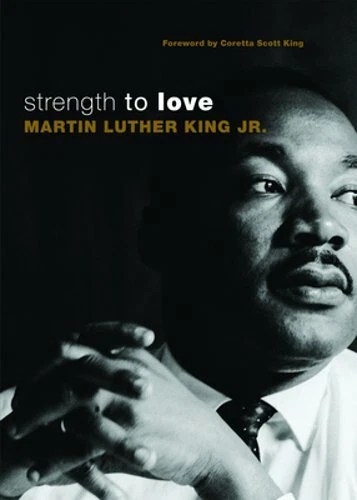
From “A Tough Mind and a Tender Heart,” in STRENGTH TO LOVE, by Dr. Martin Luther King Jr.
Rep. Al Green, D-Texas, shouts as President Donald Trump addresses a joint session of Congress at the Capitol in Washington, Tuesday, March 4, 2025. (Win McNamee/Pool Photo via AP)
Conversation: “Democracy dies in decorum.” How the “strongbuddy” relationship between Musk and Trump is a new twist on authoritarianism needing new kinds of resistance— Anand Giridharadas and Ruth Ben-Ghiat, in the.ink
What is happening right now… is that those Senators and Members of Congress are happily giving away all Congressional authority and power to Donald Trump. They are siting silently, as Elon Musk, with his $13 billion of government contracts, uses whatever algorhythm he has to identify key words that he doesn’t like, and just starts cutting programs. We all would love to address waste, fraud, and abuse. We’d love to address government efficiency. But you cannot sit here, not a single one of my Republican colleagues can sit here and say you know what Elon Musk is cutting, that you know it to be waste, fraud, and abuse. You don’t: nobody does! He doesn’t even know if it’s waste fraud and abuse. Because there’s no investigation, there’s no evaluation. Instead, he’s just cutting.
And you all sit there silently: letting some unelected billionaire get access to our personal identification information, cut programs willy nilly, cut funding… potentially stop funding. I don’t understand… on what planet do you stop the funding for a program, and then investigate it? Why aren’t you investigating it while it continues, so the status quo can continue? So that Americans who rely on this money can continue to believe they will have this money. And in many cases that Congress appropriated, and designated, and obligated, and they’re stomping all over that down at 1600 Pennsylvania.
And there isn’t a single Republican member of Congress who’s willing to stand up for Congress. For us! For Congress! Just because Donald has designated Elon Musk to do the work, and you’re either afraid that Donald Trump will support a primary opponent, or you’re afraid that Elon Musk will put $10 million into a primary opponent. And so you happily turn over all of your own authority. What is the point of being here? Why do you run for office? Why do you want to be elected to Congress? So that you can bend the knee to the executive? So you can bend the knee to Donald Trump?
There’s no mandate for Congress hiding in a cave. The mandate is to address the issues that the American people are facing. Which is inflation, which are high costs, which is affordability. And if you want to address waste, fraud, and abuse, we’re happy to do it with you. The right way: by coming back to Congress, and showing us what’s wasteful, what’s fraudulent, what’s abuse. So that we can vote, as the owners of the power of the purse, to make those decisions.
Everybody knows that Trump’s victory was not a mandate that has not been seen in many decades. And Trump goes on to talk about how all of a sudden we finally have most Americans believing the country is headed in the right direction rather than the wrong one….
The point of these kinds of lies, which are so easy to check, is, one, to overwhelm the system’s faculties of truth. At a certain point, you give up.
This is what it means, as Steve Bannon said, to “flood the zone” of [expletive]. You can check a couple of lies if all you’re doing is checking every sentence of a two-hour speech. You’re going to bore your audience and yourself.
These are more like what was happening when Trump made Sean Spicer go out in the first term and say it was the largest inauguration crowd ever. It is a way of cleaving reality into two. These lies are loyalty tests. They’re ways of getting people who accept them — JD Vance chuckling right behind him — further and further into the con.
Because once you’ve given up so much of yourself, once you’ve traded little shred of dignity after little shred of dignity, once you’ve accepted these cruelties and outrageous things you would not have thought you would have accepted a couple of years before — at a certain point, you’re in too deep, you’ve gone too far. You’ve cut yourself off from old sources of support, from old versions of your own internal ethic and your own internal self-esteem and self-conception.
And now really all you have as a Republican politician or a staffer is the success of Donald Trump. You’ve thrown so much money into this that it really better work out.
That’s what I think this lying is. It’s really not about Donald Trump trying to give you a sense of the world. He knows perfectly well that people can see what is happening to the stock market. They don’t think on that particular day: We are in a new golden age where everything is going great.
What he is doing is breaking the system into those who are loyal to him and those who are not, and then those who are not can be sort of purged — at least if they’re on the Republican side — one by one by one by one.
The stars of ‘Oppenheimer,’ ‘The Brutalist,’ ‘Anora’ and ‘Poor Things’ deserve their accolades, but there’s a disturbing pattern here…
If Kamala Harris were president right now, these wins might merit a shrug. But given that every branch of the U.S. government and now military is currently headed up by a person possessed of XY chromosomes who has been held liable for sexual abuse, and his cabinet includes multiple men accused of sexual assault, it’s difficult not to conclude that, even outside of Hollywood, women have been demoted.
Hollywood, too, has done better in the past. Between 2021 and 2023, Michelle Yeoh, Frances McDormand, and Jessica Chastain won Oscars for playing a sci-fi warrior, a nomadic widow, and a televangelist, respectively. And in the recent past, we’ve seen top actresses take star turns as larger-than-life figures like Katherine Graham, Queen Elizabeth, and Erin Brockovich….
Going into this year’s Oscars, the big question was whether Madison would win for best actress or the honor would go to 1980s “it-girl” Demi Moore for her unsettling performance in the horror film The Substance. Playing an over-50 TV fitness instructor who is laid off for age-related reasons, Moore is so desperate to reclaim her lost youth that she willingly injects a mysterious substance into herself, which causes her to violently vacate her body and intermittently inhabit that of a dewy woman half her age (played by Margaret Qualley). Insofar as Moore’s character soon discovers that everyone wants a piece of her nubile self, not her authentic menopausal one, it appeared to some moviegoers this week that the Oscar going to 25-year-old Madison, not 62-old Moore, precisely mirrored the message of the movie.
But the larger irony here may be that Moore and Madison’s roles aren’t that far apart: Both presume a universe where a woman’s only value lies in her firm flesh and sexual allure, her character and intellect be damned. This is also a universe in which female friendship and camaraderie are either nonexistent or in short supply.
It’s the job of the Oscars to celebrate the best performances, wherever they are found. And both Madison and Stone were stand-outs. But the film world also needs to consider its role in reinforcing this backlash moment — a moment where the Manosphere has replaced #MeToo. And the only women who appear to have political power are Barbified stooges and mouthpieces for a president who, in addition to being a budding autocrat and sex pest, once owned beauty pageants. Trump is also known for rating women’s bodies on a scale of 1 to 10, as if they were show horses, and not human beings.
Given the current dystopia, any cause for celebration should be embraced. Still, it matters what is being celebrated. Right now, we need more stories about women triumphing in all sorts of arenas, not just ones that insist on reducing them to sexual objects. Hollywood, get on it!
If you have the stomach to think about what is happening, read on. If you’d rather skip the news, and immerse yourself in something else, skip ahead to the ESCAPE section.
Podcast: On the Media: Wars are Won By Stories — Brooke Gladstone interviews Elyse Graham, author of Book and Dagger – How Scholars and Librarians Became the Unlikely Spies of World War Two
With police forces in between, pro-Palestinian and pro-Israeli protesters stand across the street from one another in Montclair, New Jersey. Photo by Shayna Rudoren
Say it loud and say it clear, the guy in the black hoodie began. We don’t want no Zionists here! He punched his fist in the air as the crowd joined in. We don’t want no Zionists here! We don’t want no Zionists here! We don’t want no Zionists here!
Welcome to Montclair, New Jersey, circa 2024. A New York suburb of 40,000 known for its racial diversity, liberal politics, magnet schools, impossible real estate prices (and taxes), panoply of restaurants, annual film festival, frequent Yacht Rock concerts and, now, hate speech. Stephen Colbert’s hometown, and mine. …
I know a lot of my Jewish neighbors, the folks that were on an adjacent corner with Israeli flags and signs like “Denying Jewish history and our connection to Israel is an act of hate,” heard the “No Zionists here” chant as equivalent to “No Jews.” They rightfully point out that it’s impossible to imagine a similar scenario in Montclair targeting any other religious or ethnic group. …
And whichever definition [of Zionism] you choose, whichever group you target, I’m going to be uncomfortable with people chanting that they should not be allowed in my hometown.
Which, I should be clear, does not mean those people should not be allowed to chant it. I believe one of the proudest moments in our history was a Jewish ACLU lawyer defending neo-Nazis’ right to march in Skokie. If the Montclair City Council added a Palestinian flag under the Israeli and Ukrainian ones on our flagpole on Church Street, I’d be fine with it.
It’s important not to get distracted by one particular video you might see and to focus attention on the core demands of this movement. … The core of this movement is the demand to end university and American governmental complicity with Israel’s system of oppression, which is now culminated in this horrifying slaughter of people in Gaza.
This complicity must end. It must end because, among other things, it puts Jews in danger. We must see the lie that you can construct a system of Jewish safety on the destruction and brutalization of another people. We should recognize that October the 7th is just a taste of the horrors that will come to everybody if this system of oppression is deepened and entrenched. Because a system of violence breeds violence. That does not excuse Hamas from its moral responsibility for the horrors of October 7th, not for a second. That’s why I said it’s critical that we promote the idea, that we argue for a movement that makes the distinction between ethical and unethical resistance.
Student protesters: I admire your empathy for Gazans, your concern for the world, your moral ambition to make a difference.
But I worry about how peaceful protests have tipped into occupations of buildings, risks to commencements and what I see as undue tolerance of antisemitism, chaos, vandalism and extremism. I’m afraid the more aggressive actions may be hurting the Gazans you are trying to help.
I’m shaped in my thinking by the Vietnam War protests of the 1960s. Students who protested then were right on the merits: The war was unwinnable and conducted in ways that were reckless and immoral.
Yet those students didn’t shorten that terrible war; instead, they probably prolonged it. Leftist activists in 1968 didn’t achieve their goal of electing the peace candidate Gene McCarthy; rather, the turmoil and more violent protests helped elect Richard Nixon, who pledged to restore order — and then dragged the war out and expanded it to Cambodia.
I think that history is worth remembering today. Good intentions are not enough. Empathy is not enough. I’m sure we all agree that it’s outcomes that matter. So the question I would ask you to ask yourselves is: Are your encampments and sacrifices — more than 1,000 protesters have been arrested so far, and unknown numbers have been suspended or expelled — actually helping Gazans?
I’ve been strongly criticizing Israel’s conduct in Gaza since last fall, and President Biden’s unconditional support for the war. So while my heart’s with the cause, it seems to me that the campus upheavals have distracted from the crisis in Gaza, rather than called attention to it. …
Protest itself is a good thing: Students can write letters to the editor, circulate petitions, hold peaceful rallies and call their members of Congress (or flood the comments section of this column!). I’m all for demanding more humanitarian aid to Gaza and a suspension of transfers of offensive weapons to Israel until it adheres to humanitarian law, plus a major push for a Palestinian state.
Finally, let me offer two concrete suggestions for how we can meaningfully help Palestinians that don’t involve occupying campuses, getting kicked out of college and risking the prolongation of the war.
First, raise funds for organizations actively helping Gazans, like Save the Children, Gisha or International Rescue Committee. That may seem discouragingly modest but it will help real people in desperate need.
Second, this may sound zany, but how about raising money to send as many of your student leaders as possible this summer to live in the West Bank and learn from Palestinians there (while engaging with Israelis on the way in or out)? West Bank monitors say that a recent Israeli crackdown on foreigners helping Palestinians, by denying entry or deporting people, has made this more difficult but not impossible.
Student visitors must be prudent and cautious but could study Arabic, teach English and volunteer with human rights organizations on the ground. Palestinians in parts of the West Bank are under siege, periodically attacked by settlers and in need of observers and advocates.
Those students returning at the end of the summer would have a much deeper understanding of the issues and how to help. It would be life-changing, an education as rich as any you’re getting on campus.
Sieve from Coffin House, Newbury Massachusetts. Unknown maker. Image credit: Historic New England.
“Those outside the academy tend to think of history as settled, as a simple recounting of what events happened on what date and who was involved in those incidents. But while history is what happened, it is also, just as important, how we think about what happened and what we unearth and choose to remember about what happened.”
“History is not the past. It’s the method we’ve evolved of organizing our ignorance of the past…. It’s the record of what’s left on the record… It’s what’s left in the sieve when the centuries have run through it…. It’s no more the past than a birth certificate is a birth, or a script is a performance, or a map is a journey…. It’s no more than the best we can do. And often, it falls short of that.”
“The common denominator of so many of the strange and troubling cultural narratives coming our way is a set of assumptions about who matters, whose story it is, who deserves the pity and the treats and the presumptions of innocence, the kid gloves and the red carpet, and ultimately the kingdom, the power, and the glory. You already know who. It’s white people in general and white men in particular, and especially white Protestant men, some of whom are apparently dismayed to find out that there is going to be, as your mom might have put it, sharing. The history of this country has been written as their story, and the news sometimes still tells it this way—one of the battles of our time is about who the story is about, who matters and who decides.”
“[U]nderstanding history as a form of inquiry—not as something easy or comforting but as something demanding and exhausting—was central to the nation’s founding. This, too, was new. In the West, the oldest stories, the Iliad and the Odyssey, are odes and tales of wars and kings, of men and gods, sung and told. These stories were memorials, and so were the histories of antiquity: they were meant as monuments….
“Only by fits and starts did history become not merely a form of memory but also a form of investigation, to be disputed, like philosophy, its premises questioned, its evidence examined, its arguments countered….
“This new understanding of the past attempted to divide history from faith. The books of world religions—the Hebrew Bible, the New Testament, and the Quran—are pregnant with mysteries, truths known only by God, taken on faith. In the new history books, historians aimed to solve mysteries and to discover their own truths. The turn from reverence to inquiry, from mystery to history, was crucial to the founding of the United States. It didn’t require abdicating faith in the truths of revealed religion and it relieved no one of the obligation to judge right from wrong. But it did require subjecting the past to skepticism, to look to beginnings not to justify ends, but to question them—with evidence.




 Valerie Block