Seneca on Saturday: when every new day is a bonus

cb8ebccdaddc699a46e9e6e3ceac9d54a23568ec

Male figure on funerary couch surrounded by funeral cortège (detail), Funerary procession, Amiternum, c. 50-1 B.C.E. (Museum, Aquila) (photo: Erin Taylor, CC BY-NC-ND 2.0)


Epistle XII: On Old Age

Pacuvius… used to hold a regular burial sacrifice in his own honor, with wine and the usual funeral feasting, and then would have himself carried from the dining-room to his chamber, while eunuchs applauded and sang in Greek to a musical accompaniment: “He has lived his life, he has lived his life!” Thus Pacuvius had himself carried out to burial every day. Let us, however, do from a good motive what he used to do from a debased motive; let us go to our sleep with joy and gladness; let us say:

I have lived; the course which Fortune set for me

Is finished.**

And if God is pleased to add another day, we should welcome it with glad hearts. That man is happiest, and is secure in his own possession of himself, who can await the morrow without apprehension. When a man has said: “I have lived!”, every morning he arises is a bonus.

** Vergil, Aenid, iv. 63

Seneca Epistles 1-65, Translation by Richard Gummere. Loeb Classical Library.

Seneca on Saturday — on generosity

Handshake.HiRes.AW

image by Andy Bridge


EPISTLE LXXXI. On Benefits.

You complain that you have met with an ungrateful person. If this is your first experience of that sort, you should offer thanks to your good luck or your caution. In this case, however, caution can effect nothing but to make you ungenerous… It is better… to get no return than to confer no benefits. Even after a poor crop one should sow again… In order to discover one grateful person, it is worth while to make trial of many ungrateful ones.


Seneca Epistles 1-65, Translation by Richard Gummere. Loeb Classical Library.
Seneca on Saturday — dangerous dinner party

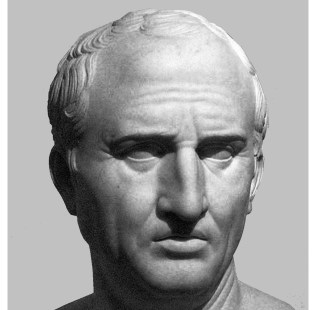
Bust of Gaius Caesar, aka “Caligula,” from the Ny Carlsberg Glyptoteket, Copenhagen.

Lord Macaulay once said that Seneca the Younger was easily quotable, but reading him straight through would be like “dining on nothing but anchovy sauce.”

I agree! Thus I present some of the condensed wit and wisdom of Seneca, every Saturday.

Here is a curious story of survival at Court. Seneca tells this story as an example of the hospitality one could expect from Gaius Caesar, aka “Caligula,” the third Emperor of Rome.


On Anger

Gaius Caesar, offended with the son of Pastor, a distinguished Roman knight, because of his foppishness and his too elaborately dressed hair, sent him to prison; when the father begged that his son’s life might be spared, Caesar, just as if he had been reminded to punish him, ordered him to be executed forthwith; yet in order not to be wholly brutal to the father, he invited him to dine with him that day. Pastor actually came and showed no reproach in his countenance. Caesar, taking a cup, proposed his health and set some one to watch him; the poor wretch went through with it, although he seemed to be drinking the blood of his Son. Caesar then sent him perfume and garlands of flowers and gave orders to watch whether he used them: he used them. On the very day on which he had buried – no, before he had yet buried – his son, he took his place among a hundred dinner-guests, and, old and gouty as he was, drained a draught of wine that would scarce have been a seemly potion even on the birthday of one of his children, all the while shedding not a single tear nor by any sign suffering his grief to be revealed; at the dinner he acted as if he had obtained the pardon he had sought for his son. Do you ask why? He had a second son.

From Lucius Annaeus Seneca the Younnger, Moral Essays, Volume I, translated by John W. Basore. Loeb Classical Library.

March Word of Mouth

810yISJIu8L._SY355_

Music: What It Is: Funky Soul and Rare Grooves (1967-1977), from the Vaults of Atlantic, Atco and Warner Bros. Records. Various artists.

Comedy:  No Can Defend — Gary Gulman

Memoir: Year of Yes — Shonda Rhimes

Writing: The Forest for the Trees: an Editor’s Advice to Writers — Betsy Lerner

Essays: 100 Essays I Don’t Have Time To Write: on Umbrellas and Sword Fights, Parades and Dogs, Fire Alarms, Children and Theater — Sarah Ruhl

Movie: Crouching Tiger, Hidden Dragon: Sword of Destiny — Yuen Woo-Ping. Netflix.

Not-So-Ancient Inspiration: “Nothing is so fatiguing as the eternal hanging on of an uncompleted task.” — William James


Seneca on Saturday — conform on the outside

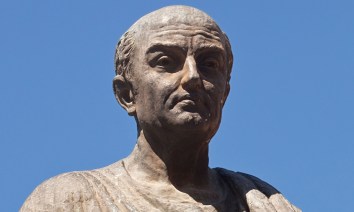
Statue of Lucius Annaeus Seneca the Younger,

Statue of Lucius Annaeus Seneca the Younger in Cordoba, Spain, by Amadeo Ruiz Olmos

Lord Macaulay once said that Seneca the Younger was easily quotable, but reading him straight through would be like “dining on nothing but anchovy sauce.”

I agree! Thus I present some of the condensed wit and wisdom of Seneca, every Saturday.

EPISTLE V. The philosopher’s mean, Part I.

I commend you and rejoice in the fact that you are persistent in your studies, and that, putting all else aside, you make it each day your endeavor to become a better man…. I warn you, however, not to act after the fashion of those who desire to be conspicuous rather than to improve, by doing things which will rouse comment as regards your dress or general way of living. Repellent attire, unkempt hair, slovenly beard, open scorn of silver dishes, a couch on the bare earth, and any other perverted forms of self-display, are to be avoided. The mere name of philosophy, however quietly pursued, is an object of sufficient scorn; and what would happen if we should begin to separate ourselves from the customs of our fellow men? Inwardly, we ought to be different in all respects, but our exterior should conform to society. Do not wear too fine, nor yet to frowzy, a toga. One needs no silver plate, encrusted and embossed in solid gold; but we should not believe the lack of silver and gold to be proof of the simple life. Let us try to maintain a higher standard of life than that of the multitude, but not a contrary standard; otherwise, we shall frighten away and repel the very persons whom we are trying to improve.

Seneca Epistles 1-65, Translation by Richard Gummere. Loeb Classical Library.

Photo credit: Gunnar Bach Pedersen, courtesy Wikimedia Commons.