Seneca on Saturday — on rising to the occasion

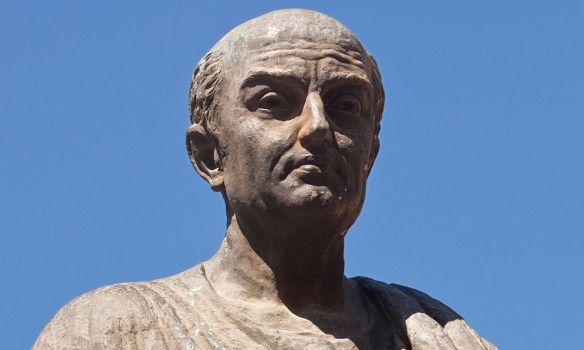
Statue of Lucius Annaeus Seneca the Younger,

Statue of Lucius Annaeus Seneca the Younger in Cordoba, Spain, by Amadeo Ruiz Olmos

Lord Macaulay once said that Seneca the Younger was easily quotable, but reading him straight through would be like “dining on nothing but anchovy sauce.”

I agree! Thus I present some of the condensed wit and wisdom of Seneca, every Saturday.


EPISTLE LXVII — On ill health and endurance of suffering

You say: “If it is a good to be brave under torture, to go to the stake with a stout heart, to endure illness with resignation, it follows that these things are desirable. But I do not see that any of them is worth praying for…”

My dear Lucilius, you must distinguish between these case; you will comprehend that there is something within them to be desired. I should prefer to be free from torture; but if the time comes when it must be endured, I shall desire that I may conduct myself therein with bravery, honor, and courage. Of course I prefer that war should not occur; but if war does occur, I shall desire that I may nobly endure the wounds, the starvation, and all that the exigency of war brings. Nor am I so mad as to crave illness; but if I must suffer illness, I shall desire that I may do nothing which shows lack of restraint, and nothing that is unmanly. The conclusion is, not that hardships are desirable, but that virtue is desirable, which enables us patiently to endure hardships.


Seneca Epistles 66-92, Translation by Richard M. Gummere. Loeb Classical Library.

Photo credit: Gunnar Bach Pedersen, courtesy Wikimedia Commons.

Seneca on Saturday — on what is enough

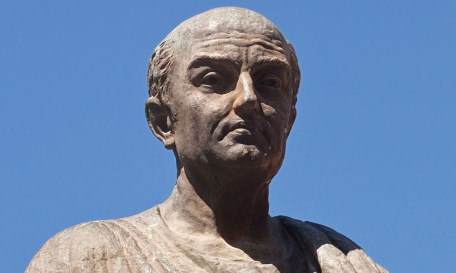
Statue of Lucius Annaeus Seneca the Younger,

Statue of Lucius Annaeus Seneca the Younger in Cordoba, Spain, by Amadeo Ruiz Olmos

EPISTLE IV: On the terrors of death

…It is the superfluous things for which men sweat,–the superfluous things that wear our togas threadbare, that force us to grow old in camp, that dash us upon foreign shores. That which is enough is ready to our hands. He who has made a fair compact with poverty is rich. Farewell.

Seneca Epistles 1-65, Translation by Richard Gummere. Loeb Classical Library.

Photo credit: Gunnar Bach Pedersen, courtesy Wikimedia Commons.

February Word of Mouth


61GagbB7KeL._SX373_BO1,204,203,200_


Graphic Novel: Dragons BewareJorge Aguirre and Rafael Rosado

Fiction: Capital: a Novel  — John Lanchester

Memoir: I See You Made an Effort  — Annabelle Gurwitch

Non-Fiction: The 48 Laws of Power  — Robert Greene 

Music: Bossa Nova Soul SambaIke Quebec 


TV: Annika Bengtzon, Crime Reporter Amazon video.

Ancient Inspiration: “If you’re irritable, man, train yourself to put up with abuse, and not get upset when you’re insulted.” Epictetus, Discourses. 


Seneca on Saturday: ancient Roman caution

Statue of Lucius Annaeus Seneca the Younger,

Statue of Lucius Annaeus Seneca the Younger in Cordoba, Spain, by Amadeo Ruiz Olmos


Lord Macaulay once said that Seneca the Younger was easily quotable, but reading him straight through would be like “dining on nothing but anchovy sauce.”

I agree! Thus I present some of the condensed wit and wisdom of Seneca, every Saturday.

On Anger

When you are about to rejoice most, you will have most to fear. When everything seems to you to be peaceful, the forces that will harm are not nonexistent, but inactive. Always believe that there will come some blow to strike you.

Moral Essays, Volume I, by Lucius Annaeus Seneca the Younger, translated by John W. Basore. Loeb Library.

Photo credit: Gunnar Bach Pedersen, courtesy Wikimedia Commons.

Deity of the Month: Fornax

Site à vocation pédagogique Histoire-Géographie (J-F BRADU)

The goddess Fornax was in charge of preventing grain from burning in ovens. The festival of Fornacalia was held in her honor in early February, sometime around February 17. The grain was first dried in ovens before being ground in mills for flour. During the Fornacalia, a sacrifice was made in front of the oven, before families shared a communal meal with their neighbors in front of a communal hearth.

The mosaic above is part of a floor of 40 panels with scenes depicting the agricultural calendar. It was found in the archaeological site at Saint-Romain-en-Gal, France, and dates from the early 3rd century CE; it is now located in the Musée d’Archéologie Nationale in Saint-Gemain-en-Laye, just outside of Paris.

Image credit: Site à vocation pédagogique Histoire-Géographie (J-F BRADU)

On courage

Statue of Lucius Annaeus Seneca the Younger,

Statue of Lucius Annaeus Seneca the Younger in Cordoba, Spain, by Amadeo Ruiz Olmos

Lord Macaulay once said that Seneca the Younger was easily quotable, but reading him straight through would be like “dining on nothing but anchovy sauce.”

I agree! Thus I present some of the condensed wit and wisdom of Seneca, every Saturday.

Letter XXII — On the futility of half-way measures

No man is so faint-hearted that he would rather hang in suspense forever than drop once and for all.


Seneca Epistles 1-65, Translation by Richard Gummere. Loeb Classical Library.

Photo credit: Gunnar Bach Pedersen, courtesy Wikimedia Commons.