Word of Mouth: WTF, Part 2

Featured

Senate Minority Leader Chuck Schumer, and House Minority Leader Hakeem Jeffries. Andrew Harnik/AP Photo

ENGAGE:

Come On!: Democrats: This Is War: Isn’t It About Time You Started Acting Like It? — Michael Tomasky. “No, Democrats. No sitting around and waiting for things to change. Help make them change. Public opinion will shift more quickly if you kindle that shift… Democrats rarely try to force a change in the way voters see an issue. They rarely play the role of disruptors. Well, folks, if ever history was grabbing you by the lapels and demanding that you do some disrupting, it’s now. And if the hearts and minds of the working class constitute the main front in our political battle, how about a weekly press conference by Democrats ticking off the ways in which the administration has made things worse for working-class people? Trump has stripped the National Labor Relations board of a quorum, meaning that it can’t defend workers’ rights. People don’t care? Nonsense. Choose a couple emotionally charged examples that will make them care.”

Fear, Chaos and Capture: Trump’s American Takeover Amicus Podcast, with Dahlia Lithwick, an interview with Kim Lane Scheppele, Trump’s moves follow the authoritarian playbook in Hungary, Russia, Venezuela, in which an authoritarian is democratically elected, changes the constitution, and then cancels all legal precedents. “It’s important to keep toeholds that you can use to leverage into more power for the opposition… civil sector groups, state governments in blue states, anything that has not yet been captured… we should lean into the parts of the government that are not gonna go down without a fight…. look at where public outrage can at least gum up the works. Everything that this administration does now that is bringing down democracy and causing pain should be met with friction. You may not be able to stop it, but you can slow it down.”

Scapegoats: Trump’s Boogeyman: D.E.I. — The New Yorker Radio Hour Podcast. David Remnick interviews Jelani Cobb, Dean of Columbia School of Journalism, who says: “Morale is not great [among journalists]. We should never allow young or emerging journalists to have the idea that there’s a one to one relationship between our effort and the outcome…. We don’t know what the ratio is — it’s unknowable, unpredictable, completely random. And my version of encouragement has been that we keep doing the work until we get to that breakthrough moment where it actually really, really does make a difference.”

Move Fast and Break Things. How WIRED Magazine is Scooping the Competition, plus Whither the Democrats? On the Media Podcast. Brook Gladstone interviews Ezra Levin, of Indivisible, on Congressional Democrats’ “Stop the Steal” bill: “Nobody with even a passing understanding or familiarity with how Congress works, believes this bill is ever gonna get a vote; nobody believes if this bill got a vote that it would pass; nobody believes that if it passed that Donald Trump would sign it; nobody believes that if he vetoed it that Congress would override it; and nobody believes that if Congress even succeeded in overriding it, that Trump would agree to implement it. What this bill does is say, ‘I’m Chuck Schumer, I’m Hakeem Jeffries: I care.’ I don’t care that you care; I care that you’re using the power available to you.” Indivisible suggests using Mitch McConnell’s playbook to push back.

ESCAPE:

Comedy: How to Find a Husband Jackie Fabulous

Comedy: Big Guy — Rachel Feinstein

Comedy: Lonely Flowers — Roy Wood, Jr.

SOMETHING IN BETWEEN:

Movie: Number 24 John Andreas Andersen

Movie: Sophie Scholl: the Final Days —Marc Rothemund

Music and Nostalgia Part III, a radical change of mind

Is disco ancient history?

Like a politician whose “views have evolved over the years,” my feelings about disco have undergone a transformation. The rallying cry of my adolescent cohort was DEATH BEFORE DISCO. Our obsession was hard driving, often British rock. A new release from Joe Jackson, Elvis Costello, the Police, the Clash, or the Talking Heads meant sitting on the floor for repeated listenings, immersing oneself in the record jacket (often black or florescent pink or green), memorizing the lyrics (often cynical), discovering who played bass (why on earth did I care who played bass?). We listened to this music as if our lives depended on it; we defended this music as if it were under attack. Other rock and pop —the Stones, Steely Dan, Linda Ronstadt— was practically in the water supply, and didn’t require one to actively seek it out or pledge allegiance to it.

images-3

Joe Jackson Band, Beat Crazy, 1980

But the soundtrack of the time, keeping everybody’s booty shaking, was the pulsating glitter of disco —tacky, vulgar and unavoidable since Saturday Night Fever, a movie whose preening, strutting misogyny made a deep and unwanted impression on me.


The thinking teenage feminist’s logical antidote

DEATH BEFORE DISCO was the only appropriate response to the heaving, ecstatic moans of Donna Summer (Love to Love You, Baby), Diana Ross (Love Hangoverand Thelma Houston (Don’t Leave Me This Way). All these masochistic divas gyrating their pelvises and moaning about “love” was part of my problem with disco. The implicit idea that one was at the disco itself looking for sex was another issue. Looking back on it, the New Wave aesthetic —angry, angular and cerebral— was the thinking teenage feminist’s logical antidote to the mindless orgy at the disco.

1337275189338-cached

Donna Summer, in her heyday, dressed to moan


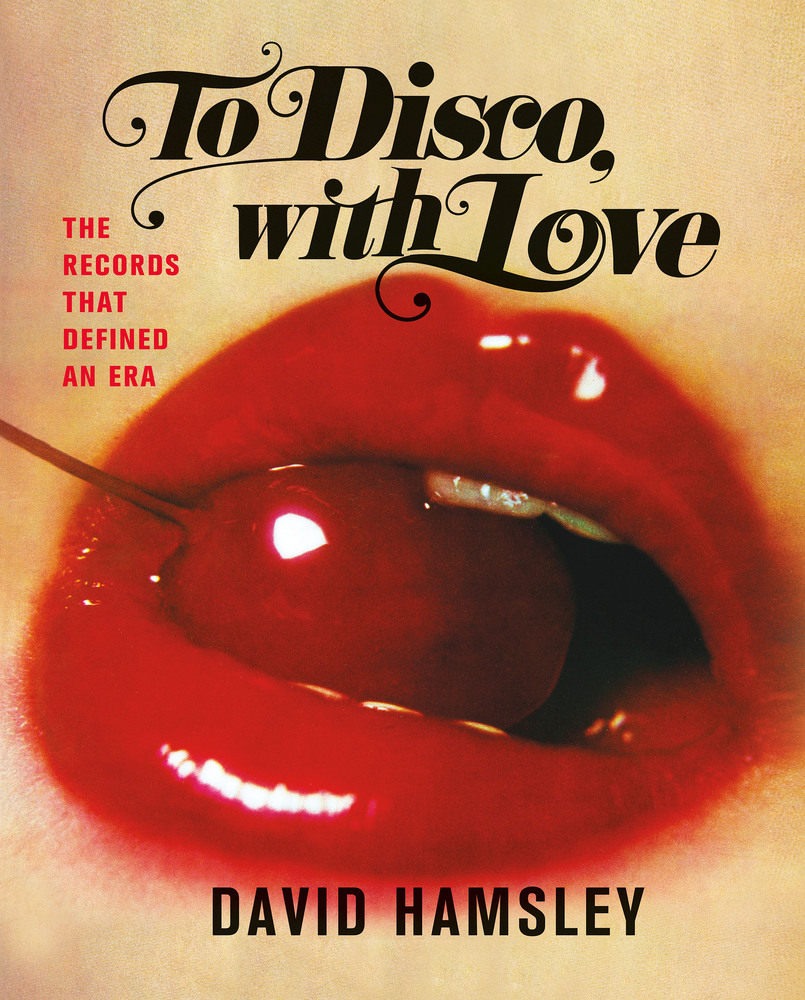
Many years, many pounds later: I have discovered that disco is an excellent motivator at the gym. Mind you, I don’t want to listen to it unless I’m suited up in lycra and strapped to a piece of equipment, when the mindless repetition of the music (Shake Shake Shake, More More More, Boogie Oogie Oogie) actually helps with the mindless repetition of the body on the machine, and drowns out whatever thumping techno yowling is currently pelting the gym. There is no better soundtrack to the skating machine than Keep It Coming, Love (KC and the Sunshine Band), Shake Your Groove Thing (Peaches and Herb), or More Than a Woman (the BeeGees), the very music I once disdained so strenuously. In fact, as tawdry as I found disco culture at the time, the music itself, and even the swaggering that surrounds it, retains an odd sweetness lo these many years later. The youthful bounce found especially at the intersection of disco and soul (e.g., Al Green, Barry White, Marvin Gaye, the Jackson 5) is very helpful when one has to kick one’s own ass around the gym. Here’s a great collection, if you need one. And check out To Disco, With Love, a kind of yearbook featuring all the ridiculous and over the top record jackets, recently published.

Untitled-1


Music and nostalgia, Part I

The after-life of rock stars

It is impossible to return to the music of one’s youth without considering the rock star’s “after-life,” once the band broke up, or the solo artist no longer commanded the spotlight. Post-hit rock stars intrigue me. How have they aged? How did they handle changes in the business? Did their music change or grow as styles changed? Did they develop themselves as people beyond the limelight? And, special extra credit for artists of the 1980s: how much do they regret their rampant use of synthesizers, such a telltale sign of the age now?

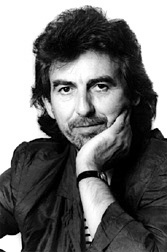
George Harrison, 1966

George Harrison, c. 1966

creem1

George Harrison, c. 1987.


George Harrison (my first favorite Beatle) had many advantages in his after-life, among them, that he was young, just 27 when his “first” band ended. Not that the break up meant he was out of the spotlight, out of favor or on the skids. Harrison immediately launched a flourishing solo career; he had a stockpile of compositions vetoed by John Lennon and Paul McCartney for Beatles albums, all ready to go. After the Beatles, Harrison played and recorded with many, many other musicians, from Ravi Shankar to Doris Troy. In many ways, Harrison is the ultimate example of how a rock star can make a graceful transition in after-life. In subsequent years, he created the first-ever mega concert fundraiser for a cause, and successfully branched out into music production, film production, humanitarian work, political activism and gardening. And all of this was before the Traveling Wilburys.

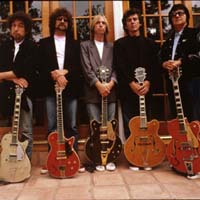
To refresh your memory, this was a super-group of rock stars who pooled their collective talent and glamour on an album that became a multi-platinum success in the late 80s. And here’s a news hook: it has been eight years since the Deluxe Second Edition re-release of the 20th Anniversary Box Set of The Traveling Wilburys Collection!

13_200

The Traveling Wilburys, 1988.


A super-group is born

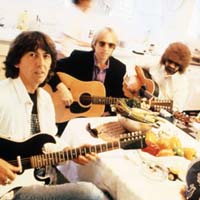
According to legend, Harrison had gathered a bunch of friends to knock off a track for the B-side of one of his Cloud Nine singles. His friends happened to be Roy Orbison, Bob Dylan, Tom Petty and Jeff Lynne of ELO. (If you are too young to know what a B-side is, or what ELO was, perhaps these meditations on mortality and time passing will not be so relevant to you.) The resulting song, “Handle With Care,” was too fabulous to waste as a B-side, so Harrison decided to get his friends together again to write a whole album in a friendly, collaborative environment. This all-star group hung out in the kitchen and garden of a borrowed house in Encino, CA; they wrote and recorded a song a day for nine days. All five frontmen wrote, sang, played and produced, apparently without ego issues, resulting in a batch of whimsical, catchy tunes that were released to great enthusiasm at the time. It revived everyone’s careers.

It’s hard to fathom, but by rock-n-roll standards, these guys were old in 1988.

6_200

George Harrison, Tom Petty, Jeff Lynne and his hair, 1988


An origins video

That Harrison and Orbison are no longer around makes the “after-life” of the Traveling Wilburys even sadder. But the music still sounds fresh —no rampant use of synthesizers. Check out the relaxed California vibe and exuberant hair of the 1980s in this fun origins-video, courtesy of the official site of the Traveling Wilburys.

https://www.youtube.com/watch?v=nTZiWlsw1Iw

Up next in this series: when the music of your youth no longer moves you.