Music and nostalgia, Part II, in which we consider the teenage brain on music

The flip side of obsessive listening

It is the 40th anniversary of the release of Bruce Springsteen’s Born to Run, whose track “Thunder Road” surely won “Most-listened-to album cut of 11th Grade” on my own turntable. Are you doing calculations to figure out my age? Your math is probably excellent, but it won’t be accurate: then, as now, I was years behind the times. Yes, even in my youth I was old.
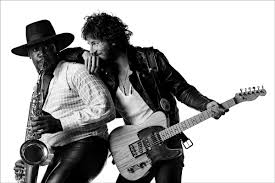
Unknown

I had to ban Born to Run for a while: I could no longer hear it. The flip side of the potency of the music from your youth is that the magic wears out if you listen to it too much. Part of the diminishing magic surely has to do with what has happened to both you and your rock star crush in the intervening years. Although Springsteen has fared surprisingly well: at 65, he continues to perform energetic four-hour stadium shows that are exhausting for audience members. He routinely releases new music, but to be honest, I don’t keep up with it. If I want that bopping around, obsessive adolescent crush feeling, it can’t be prompted by what or who I listened to as a teenager: “Thunder Road” simply reminds me how far away from an obsessive 11th-grader I really am. It has to be a new record, a new band.

Enter Fountains of Wayne, Teenage Fanclub and the Jayhawks —all “new” for me when I discovered them, sometime in the last decade or two. Now, what does it say that these new groups are all aging rock stars themselves? I was old 20 years ago, is what this says, but never mind: we are all getting closer to that Disc-o-mat in the sky.

The emotional intensity of the teenage brain

Is it just that music, like everything else when one is a teenager, is invested with a kind of intensity and importance that it just doesn’t have later in life, when one has so much more to do, and so much less energy? In his book, This Is Your Brain On MusicDaniel Levitin explores the scientific reasons behind the potency of music from one’s youth:

Part of the reason we remember songs from our teenage years is because those years were times of self-discovery, and as a consequence, they were emotionally charged; in general, we tend to remember things that have an emotional component because our amygdala and neurotransmitters act in concert to “tag” the memories as something important… Also, our brains are developing and forming new connections at an explosive rate throughout adolescence, but this slows down substantially after our teenage years, the formative phase when our neural circuits become structured out of our experiences.

images-2This explains why my new music crushes are a pale facsimile of my teenage music crushes. I have no idea who is even in the band. Changes in how I listen to music have no doubt multiplied the muting effect. I used to have a physical relationship with music: mooning over record jackets, using stacks of records to do my homework on, struggling to fit 45 adaptors into singles, getting up to flip the record over, spending hours at Disc-o-mat. When CD technology arrived, with its diabolical packaging, and pointless booklets printed in 2-point type, I stopped reading the lyrics. With push-button CD players that held five CDs at a time, I was one step further removed from the music, but still visited HMV or Tower Records to flip through bins to acquire new music. CDs by mail via Amazon put those stores out of business, and took me one step further away from the music.

If you like this, you might like that

Now I have no physical music, other than the CDs and records gathering dust in the cabinet. “My” music is on my computer, or on my phone; I have a subscription to Pandora, it’s in the air. I have no idea who is responsible for a good 75% of “my” new music, even as I play it often. I see on i-Tunes, “if you like this, you might like that” —do I care what “that” is? At my desk, I look up occasionally, and note that one of the songs I like is by a group called the High Llamas. Who? Does it make any difference?

A musical friend recently put me in touch with The Needle Doctor, so that I could get my turntable, which had broken sometime in the early 90s, in working order. The part came in the mail with shocking speed. I opened the cabinet, blew off the dust and replaced the needle, while my highly tactile 6-year-old son watched, impatient to get his sticky little hands on the vinyl, the turntable, the record jacket, anything, really. No doubt, when he grows up, he will only have to think of a song and it will instantly play on the mind-activated speakers in his living room. When I pulled out all the records that I had spent so much time poring over and coloring on —stacks of the Beatles, the Beach Boys and yes, Bruce— my heart exploded in gladness. We got through a handful of my old favorite tracks on various albums, and then something happened, right in the midst of the life-changing guitar solo on “Sultans of Swing.” No sound. The needle was fine: the receiver broke! Will it take me another 25 years to get it fixed? Stay tuned…

Next up in this series: Death before Disco.

 

Seneca on Saturday — fear and hope

Statue of Lucius Annaeus Seneca the Younger,

Statue of Lucius Annaeus Seneca the Younger in Cordoba, Spain, by Amadeo Ruiz Olmos

Lord Macaulay once said that Seneca the Younger was easily quotable, but reading him straight through would be like “dining on nothing but anchovy sauce.” I agree! Thus I present some of the condensed wit and wisdom of Seneca, every Saturday.


EPISTLE  V. The philosopher’s mean, Part II.

Just as the same chain fastens the prisoner and the soldier who guards him, so hope and fear, dissimilar as they are, keep step together; fear follows hope. I am not surprised that they proceed in this way; each alike belongs to a mind that is in suspense, a mind that is fretted by looking forward to the future. But the chief cause of both these ills is that we do not adapt ourselves to the present, but send our thoughts a long way ahead. … The present alone can make no man wretched.

Seneca Epistles 1-65, Translation by Richard Gummere. Loeb Classical Library.

Photo credit: Gunnar Bach Pedersen, courtesy Wikimedia Commons.

Deity of the Month: JANUS


janus_vienna

Janus coin from Republican Rome, c. 225-12 BCE.                           Image courtesy of VROMA.org


Janus was one of the earliest gods, worshipped before Rome was founded as a city. He was the god of beginnings, and endings, and is often represented in two-headed form, looking both forward and backward. He was associated with doorways, gates and archways, and was the first god invoked in any sacrifice. The first month of the year was named after him, January. There was a cult in his honor on a hill in Rome, which was named after him, the Janiculum.

Freedom and despair

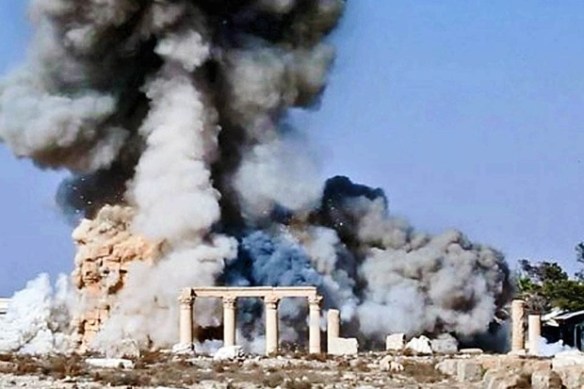
Ancient ruins destroyed by fundamentalists

ISIS blows up ancient Roman ruins at Palmyra, in August, 2015. Photo credit: the Times of London.

At a moment when fear might cloud better judgment, here are some lucid thoughts on fundamentalism. They come from Steven Pressfield’s wonderful treatise on creativity, The War of Art.

Fundamentalism is the philosophy of the powerless, the conquered, the displaced and the dispossessed. Its spawning ground is the wreckage of political and military defeat, as Hebrew fundamentalism arose during the Babylonian captivity, as white Christian fundamentalism appeared in the American South during Reconstruction, as the notion of the Master Race evolved in Germany following World War I. In such desperate times, the vanquished race would perish without a doctrine that restored hope and pride. Islamic fundamentalism ascends from the same landscape of despair and possesses the same tremendous and potent appeal.

What exactly is this despair? It is the despair of freedom. The dislocation and emasculation experienced by the individual cut free from the familiar and comforting structures of the tribe and the clan, the village and the family.

It is the state of modern life.

The fundamentalism (or, more accurately, the beleaguered individual who comes to embrace fundamentalism) cannot stand freedom. He cannot find his way into the future, so he retreats to the past. He returns in imagination to the glory days of his race and seeks to reconstitute both them and himself in their purer, more virtuous light. He gets back to basics. To fundamentals.

Fundamentalism and art are mutually exclusive. There is no such thing as fundamentalist art. This does not mean that the fundamentalist is not creative. Rather, his creativity is inverted. He creates destruction. Even the structures he builds, his schools and networks of organization, are dedicated to annihilation, of his enemies and of himself.

But the fundamentalist reserves his greatest creativity for the fashioning of Satan, the image of his foe, in opposition to which he defines and gives meaning to his own life. Like the artist, the fundamentalist experiences Resistance. He experiences it as temptation to sin. Resistance to the fundamentalist is the call of the Evil One, seeking to seduce him from his virtue.

It may be that the human race is not ready for freedom…. The paradox seems to be, as Socrates demonstrated long ago, that the truly free individual is free only the extent of his own self-mastery. While those who will not govern themselves are condemned to find masters to govern over them.


Seneca on Saturday — Holidays haven’t changed much

Statue of Lucius Annaeus Seneca the Younger,

Statue of Lucius Annaeus Seneca the Younger in Cordoba, Spain, by Amadeo Ruiz Olmos

Lord Macaulay once said that Seneca the Younger was easily quotable, but reading him straight through would be like “dining on nothing but anchovy sauce.” I agree! Thus I present some of the condensed wit and wisdom of Seneca, every Saturday.


***

From Epistle XVIII, On Festivals and Fasting

It is the month of December, and yet the city is at this very moment in a sweat. License is given to the general merrymaking. Everything resounds with mighty preparations, — as if the Saturnalia differed at all from the usual business day! So true is it that the difference is nil, that I regard as correct the remark of the man who said: “Once December was a month; now it is a year.”

… the surest proof which a man can get of his own constancy [is] if he neither seeks the things which are seductive and allure him to luxury, nor is led into them. It shows much more courage to remain dry and sober when the mob is drunk and vomiting; but it shows greater self-control to refuse to withdraw oneself and to do what the crowd does, but in a different way, — thus neither making oneself conspicuous nor becoming one of the crowd. For one may keep holiday without extravagance.”

Seneca Epistles 1-65, Translation by Richard Gummere. Loeb Classical Library.

Photo credit: Gunnar Bach Pedersen, courtesy Wikimedia Commons.

Seneca on Saturday — over- and under-sharing

Statue of Lucius Annaeus Seneca the Younger,

Statue of Lucius Annaeus Seneca the Younger in Cordoba, Spain, by Amadeo Ruiz Olmos

Lord Macaulay once said that Seneca the Younger was easily quotable, but reading him straight through would be like “dining on nothing but anchovy sauce.” I agree! Thus I present some of the condensed wit and wisdom of Seneca, every Saturday.

***

EPISTLE III. On True and False Friendship

You have sent a letter to me through the hand of a “friend” of yours, as you call him. And in your very next sentence you warn me not to discuss with him all the matters that concern you, saying that even you yourself are not accustomed to do this; in other words, you have in the same letter affirmed and denied that he is your friend. Now if you used this word of ours in the popular sense, and called him “friend” in the same way in which we speak of all candidates for election as “honourable gentlemen,” and as we greet all men whom we meet casually, if their names slip us for the moment, with the salutation “my dear sir,” – so be it. But if you consider any man a friend whom you do not trust as you trust yourself, you are mightily mistaken and you do not sufficiently understand what true friendship means….

Ponder for a long time whether you shall admit a given person to your friendship; but when you have decided to admit him, welcome him with all your heart and soul. …Regard him as loyal, and you will make him loyal. …

There is a class of men who communicate, to anyone whom they meet, matters which should be revealed to friends alone, and unload upon the chance listener whatever irks them. Others, again, fear to confide in their closest intimates; and if it were possible, they would not trust even themselves, burying their secrets deep in their hearts. But we should do neither. …

In like manner you should rebuke these two kinds of men, – both those who always lack repose, and those who are always in repose. For love of bustle is not industry, – it is only the restlessness of a hunted mind. And true repose does not consist in condemning all motion as merely vexation; that kind of repose is slackness and inertia.

Seneca Epistles 1-65, Translation by Richard Gummere. Loeb Classical Library.

Photo credit: Gunnar Bach Pedersen, courtesy Wikimedia Commons.