

The flip side of obsessive listening
It is the 40th anniversary of the release of Bruce Springsteen’s Born to Run, whose track “Thunder Road” surely won “Most-listened-to album cut of 11th Grade” on my own turntable. Are you doing calculations to figure out my age? Your math is probably excellent, but it won’t be accurate: then, as now, I was years behind the times. Yes, even in my youth I was old.
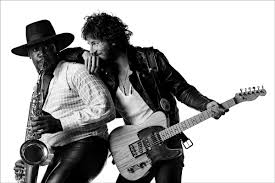
I had to ban Born to Run for a while: I could no longer hear it. The flip side of the potency of the music from your youth is that the magic wears out if you listen to it too much. Part of the diminishing magic surely has to do with what has happened to both you and your rock star crush in the intervening years. Although Springsteen has fared surprisingly well: at 65, he continues to perform energetic four-hour stadium shows that are exhausting for audience members. He routinely releases new music, but to be honest, I don’t keep up with it. If I want that bopping around, obsessive adolescent crush feeling, it can’t be prompted by what or who I listened to as a teenager: “Thunder Road” simply reminds me how far away from an obsessive 11th-grader I really am. It has to be a new record, a new band.
Enter Fountains of Wayne, Teenage Fanclub and the Jayhawks —all “new” for me when I discovered them, sometime in the last decade or two. Now, what does it say that these new groups are all aging rock stars themselves? I was old 20 years ago, is what this says, but never mind: we are all getting closer to that Disc-o-mat in the sky.
The emotional intensity of the teenage brain
Is it just that music, like everything else when one is a teenager, is invested with a kind of intensity and importance that it just doesn’t have later in life, when one has so much more to do, and so much less energy? In his book, This Is Your Brain On Music, Daniel Levitin explores the scientific reasons behind the potency of music from one’s youth:
“Part of the reason we remember songs from our teenage years is because those years were times of self-discovery, and as a consequence, they were emotionally charged; in general, we tend to remember things that have an emotional component because our amygdala and neurotransmitters act in concert to “tag” the memories as something important… Also, our brains are developing and forming new connections at an explosive rate throughout adolescence, but this slows down substantially after our teenage years, the formative phase when our neural circuits become structured out of our experiences.”
 This explains why my new music crushes are a pale facsimile of my teenage music crushes. I have no idea who is even in the band. Changes in how I listen to music have no doubt multiplied the muting effect. I used to have a physical relationship with music: mooning over record jackets, using stacks of records to do my homework on, struggling to fit 45 adaptors into singles, getting up to flip the record over, spending hours at Disc-o-mat. When CD technology arrived, with its diabolical packaging, and pointless booklets printed in 2-point type, I stopped reading the lyrics. With push-button CD players that held five CDs at a time, I was one step further removed from the music, but still visited HMV or Tower Records to flip through bins to acquire new music. CDs by mail via Amazon put those stores out of business, and took me one step further away from the music.
If you like this, you might like that
Now I have no physical music, other than the CDs and records gathering dust in the cabinet. “My” music is on my computer, or on my phone; I have a subscription to Pandora, it’s in the air. I have no idea who is responsible for a good 75% of “my” new music, even as I play it often. I see on i-Tunes, “if you like this, you might like that” —do I care what “that” is? At my desk, I look up occasionally, and note that one of the songs I like is by a group called the High Llamas. Who? Does it make any difference?
A musical friend recently put me in touch with The Needle Doctor, so that I could get my turntable, which had broken sometime in the early 90s, in working order. The part came in the mail with shocking speed. I opened the cabinet, blew off the dust and replaced the needle, while my highly tactile 6-year-old son watched, impatient to get his sticky little hands on the vinyl, the turntable, the record jacket, anything, really. No doubt, when he grows up, he will only have to think of a song and it will instantly play on the mind-activated speakers in his living room. When I pulled out all the records that I had spent so much time poring over and coloring on —stacks of the Beatles, the Beach Boys and yes, Bruce— my heart exploded in gladness. We got through a handful of my old favorite tracks on various albums, and then something happened, right in the midst of the life-changing guitar solo on “Sultans of Swing.” No sound. The needle was fine: the receiver broke! Will it take me another 25 years to get it fixed? Stay tuned…
Next up in this series: Death before Disco.




 Valerie Block