
Advice for writers

images

Image from Pixabay.


“If you are a creative worker, remember that time spent in finding an independent technique is seldom wasted. We are accustomed to think of the success of a man like Joseph Conrad, a Pole, in writing the English language, or of the work of an electrical genius like Steinmetz, as savoring of the miraculous. To have had to work out their problems alone — what a tremendous obstacle to overcome! On the contrary; the necessity for independent action was one of the conditions of their success, and to see and admit this is in no way to detract from the worth of their accomplishment.”

— Dorothea Brande, Wake Up and Live!

Wake Up and Live! is an impatient, dyspeptic self-help guide from 1936 on how to overcome the fear of failure. You can skip right past Brande’s descriptions of the many different kinds of failure, and get right to the how to overcome it part. In a nutshell, her slogan is, “Act as if it were impossible to fail.” This is good advice for any enterprise, writing especially.

Good advice can sometimes come from not such great sources: Brande, who also wrote the perennially popular  Becoming a Writer, has recently been outed for elitism, anti-Modernism, anti-Semitism and fascist sympathies. Read this fascinating piece by cultural historian Joanna Scutts about how successful self-help authors, like Brande, Napoleon Hill and Dale Carnegie, “worked to convince readers that they could take power into their own hands, which were not tied by economic circumstances or political realities. That the genre experienced a boom during the politically turbulent 1930s was not a coincidence, but rather a consequence, of that turbulence.” 

And then act as if it were impossible to fail.

March Word of Mouth

810yISJIu8L._SY355_

Music: What It Is: Funky Soul and Rare Grooves (1967-1977), from the Vaults of Atlantic, Atco and Warner Bros. Records. Various artists.

Comedy:  No Can Defend — Gary Gulman

Memoir: Year of Yes — Shonda Rhimes

Writing: The Forest for the Trees: an Editor’s Advice to Writers — Betsy Lerner

Essays: 100 Essays I Don’t Have Time To Write: on Umbrellas and Sword Fights, Parades and Dogs, Fire Alarms, Children and Theater — Sarah Ruhl

Movie: Crouching Tiger, Hidden Dragon: Sword of Destiny — Yuen Woo-Ping. Netflix.

Not-So-Ancient Inspiration: “Nothing is so fatiguing as the eternal hanging on of an uncompleted task.” — William James


February Word of Mouth


61GagbB7KeL._SX373_BO1,204,203,200_


Graphic Novel: Dragons Beware — Jorge Aguirre and Rafael Rosado

Fiction: Capital: a Novel  — John Lanchester

Memoir: I See You Made an Effort  — Annabelle Gurwitch

Non-Fiction: The 48 Laws of Power  — Robert Greene 

Music: Bossa Nova Soul Samba — Ike Quebec 


TV: Annika Bengtzon, Crime Reporter — Amazon video.

Ancient Inspiration: “If you’re irritable, man, train yourself to put up with abuse, and not get upset when you’re insulted.” Epictetus, Discourses. 


Music and Nostalgia Part III, a radical change of mind

Is disco ancient history?

Like a politician whose “views have evolved over the years,” my feelings about disco have undergone a transformation. The rallying cry of my adolescent cohort was DEATH BEFORE DISCO. Our obsession was hard driving, often British rock. A new release from Joe Jackson, Elvis Costello, the Police, the Clash, or the Talking Heads meant sitting on the floor for repeated listenings, immersing oneself in the record jacket (often black or florescent pink or green), memorizing the lyrics (often cynical), discovering who played bass (why on earth did I care who played bass?). We listened to this music as if our lives depended on it; we defended this music as if it were under attack. Other rock and pop —the Stones, Steely Dan, Linda Ronstadt— was practically in the water supply, and didn’t require one to actively seek it out or pledge allegiance to it.

images-3

Joe Jackson Band, Beat Crazy, 1980

But the soundtrack of the time, keeping everybody’s booty shaking, was the pulsating glitter of disco —tacky, vulgar and unavoidable since Saturday Night Fever, a movie whose preening, strutting misogyny made a deep and unwanted impression on me.


The thinking teenage feminist’s logical antidote

DEATH BEFORE DISCO was the only appropriate response to the heaving, ecstatic moans of Donna Summer (Love to Love You, Baby), Diana Ross (Love Hangover) and Thelma Houston (Don’t Leave Me This Way). All these masochistic divas gyrating their pelvises and moaning about “love” was part of my problem with disco. The implicit idea that one was at the disco itself looking for sex was another issue. Looking back on it, the New Wave aesthetic —angry, angular and cerebral— was the thinking teenage feminist’s logical antidote to the mindless orgy at the disco.

1337275189338-cached

Donna Summer, in her heyday, dressed to moan


Many years, many pounds later: I have discovered that disco is an excellent motivator at the gym. Mind you, I don’t want to listen to it unless I’m suited up in lycra and strapped to a piece of equipment, when the mindless repetition of the music (Shake Shake Shake, More More More, Boogie Oogie Oogie) actually helps with the mindless repetition of the body on the machine, and drowns out whatever thumping techno yowling is currently pelting the gym. There is no better soundtrack to the skating machine than Keep It Coming, Love (KC and the Sunshine Band), Shake Your Groove Thing (Peaches and Herb), or More Than a Woman (the BeeGees), the very music I once disdained so strenuously. In fact, as tawdry as I found disco culture at the time, the music itself, and even the swaggering that surrounds it, retains an odd sweetness lo these many years later. The youthful bounce found especially at the intersection of disco and soul (e.g., Al Green, Barry White, Marvin Gaye, the Jackson 5) is very helpful when one has to kick one’s own ass around the gym. Here’s a great collection, if you need one. And check out To Disco, With Love, a kind of yearbook featuring all the ridiculous and over the top record jackets, recently published.

Untitled-1


January Word of Mouth

51oLbAx3OKL._SX329_BO1,204,203,200_

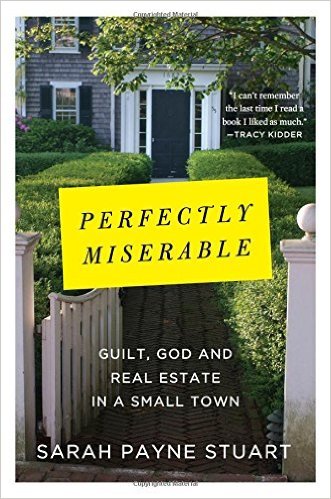
Memoir: Perfectly Miserable: Guilt, God and Real Estate in a Small Town, Sarah Payne Stuart

Fiction: The Free World, David Bezmozgis

Writing: Wired for Story, by Lisa Kron

History: Dying Everyday: Seneca at the Court of Nero, James Romm

Music: How Do You Do, Mayer Hawthorne

TV: Endeavor, Russell Lewis, PBS

Movie: Red Army, Gabe Polsky

Ancient Inspiration: “Someone who dies by his own weapons dies twice over.” Publilius Syrus